“Stardust Odyssey is not just a game; it's a space designed to provoke conversations, challenging players to confront socio-economic inequality and highlighting the importance of collaboration to create the power for change.”
Rubkwan Thammaboosadee — Researcher and Game Creator
This game is developed from a research project titled 'Performing Inequality: The Study of Body, Voice, and Cultural Memory Transmission under Neoliberalism in Thailand to Create Creative Learning Tools for Promoting Active Citizens' funded by the National Research Council of Thailand (NRCT) from 2023-2025.
Therefore, my research seeks to expand the concept of 'active citizenship' beyond mere 'awareness' and 'recognition' of society's ethical challenges, successes, or temporary participation.
In the first part of my research, I examined expressions in public spaces and the media from different groups in society, such as wealthy celebrities, low-wage workers, students, and salaried employees, to map out the role that expressions play under inequality.
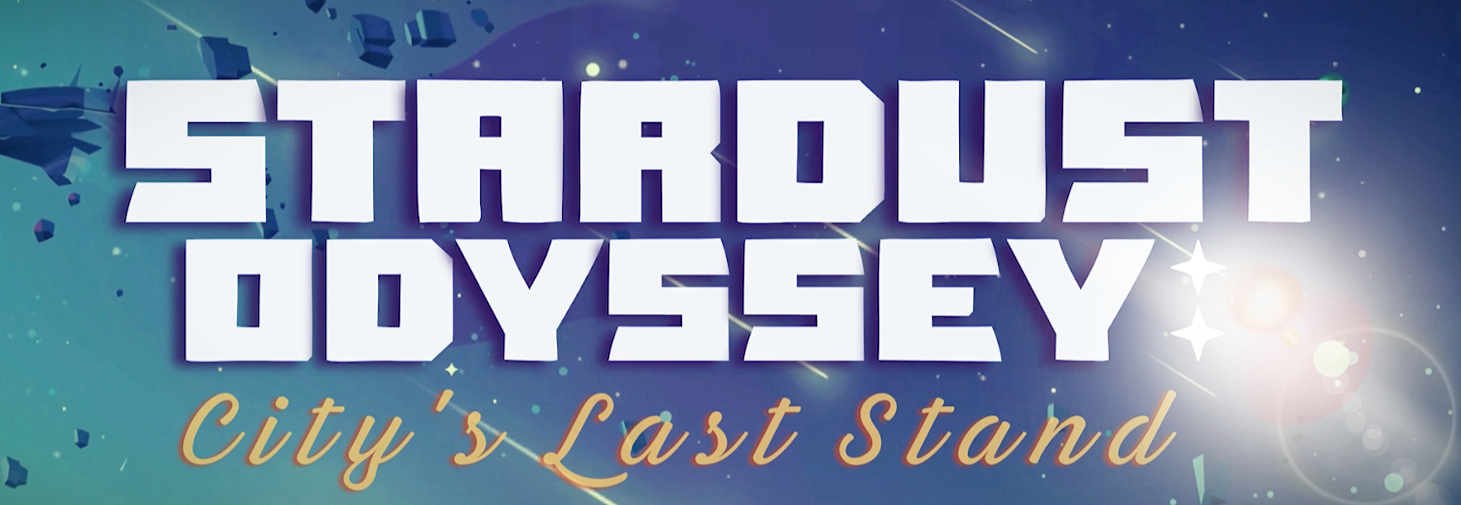
As academics, we know the limitations of academic language and jargon. This is why, in the second part of my research, I decided to present my findings in the form of a board game titled Stardust Odyssey: City's Last Stand.
We can't do it alone: In designing this game, I collaborated with Auttapon Prapasanobol ("Pon"), an educator, gamer, and fellow idealist. Together, we designed this game, hoping that players would experience and confront inequality not through lectures or textbooks, but through play, role-play, storytelling, and decision-making.
In this game, players assume the roles of characters from different backgrounds, each with varying levels of power and resources. They must face situations resembling real-life challenges, such as access to opportunities and surviving in a neoliberal society.
I want to see a more equitable society—this is my manifesto. I believe change cannot be achieved by one person alone.
I hope Stardust Odyssey becomes a tool that disturbs and challenges players' views on inequality, leading them to question the old meanings of being 'active citizens'.